
By Turtle Survival Alliance Madagascar
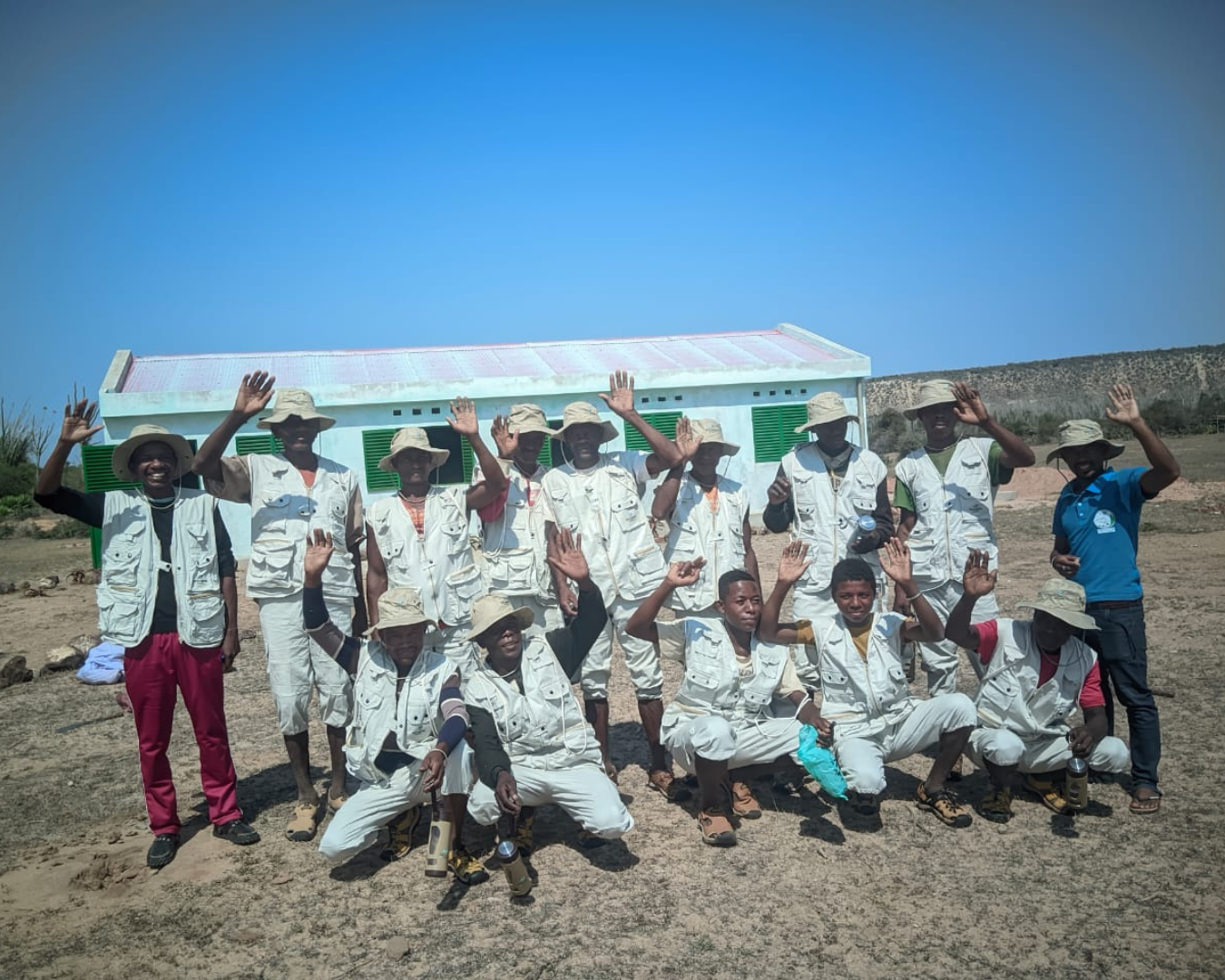
Hidden beyond the sandy tracks of Marolinta Commune in Madagascar’s Androy Region lies Malaintsatroke, a small Antandroy Karembola village where nearly every household belongs to the same extended family. In one of the country’s driest landscapes, where months can pass without rain and temperatures regularly exceed 30°C (86°F), everyone grows up knowing the 1,212-hectare (2,995-acre) Malaintsatroke Forest simply as our forest. It provides shade for livestock, medicinal plants, timber, and is home to the Radiated Tortoise (Astrochelys radiata), known locally as the “sokake”, a species that has been safeguarded for generations through fady, a strong cultural taboo that prohibits harming the tortoise among the Antandroy and Mahafaly Indigenous Peoples.
Among the twelve volunteer community rangers is Tovondietse, the village chief. Long before the area received official protection, he and the other young men of the village spent their days walking its trails carrying only their traditional meso (knife). They checked for unfamiliar footprints, listened for the sound of axes, and watched over the land because it was simply what young men in Malaintsatroke had always done. They never called themselves rangers—they saw themselves as guardians of the place their families had depended on for generations.
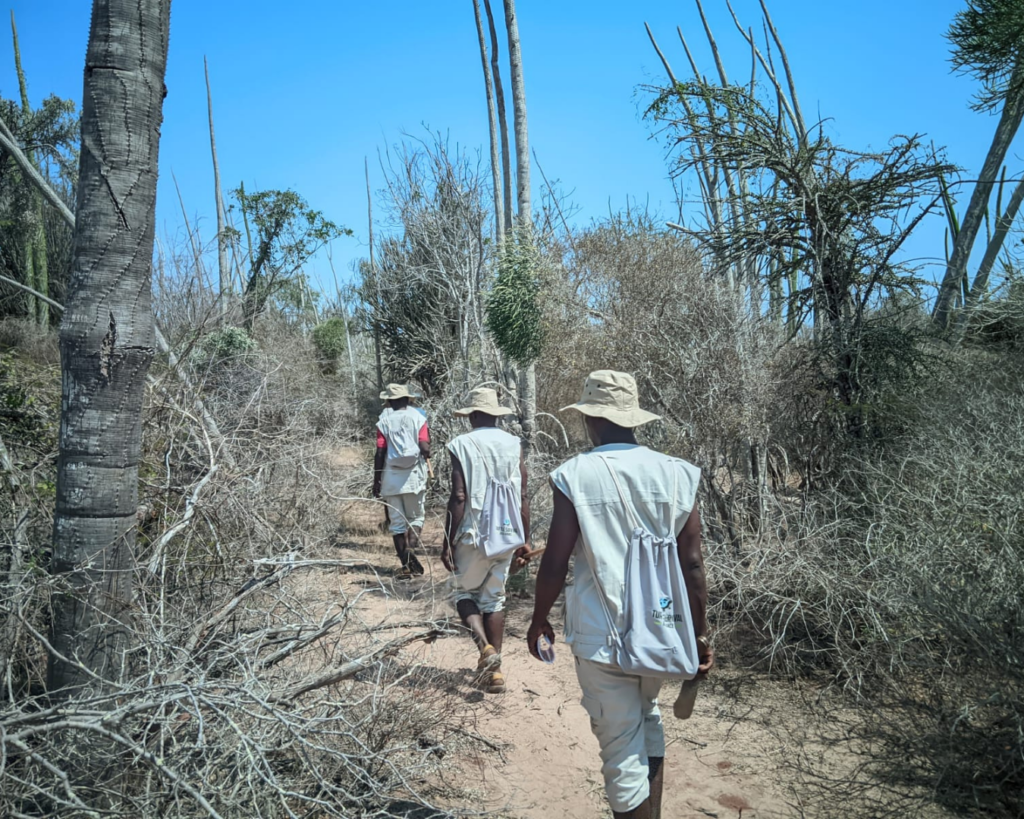
As illegal logging spread across Beloha District, Tovondietse realized that what already existed needed legal recognition rather than reinvention. Together with the village elders, he helped establish the community-based organization’s Sihanakamba Mahavelo, an initiative embraced by neighboring villages. Becoming “rangers” was therefore largely a formality. The community-based organization did not create forest guardians; it recognized those who had already dedicated themselves to protecting their ancestral forest and gave them the legitimacy to continue doing so on behalf of the entire community.
When Turtle Survival Alliance (TSA) began working with the community in 2018, it did not ask them to become rangers; they already were. Instead, TSA strengthened what was already in place by providing equipment, training, and, more recently, introducing the Spatial Monitoring And Reporting Tool (SMART) patrol system. The transition has not been easy. Most of the rangers had only ever used basic keypad phones, and many had little or no formal education. In fact, TSA built the first primary school in Malaintsatroke, making education itself a relatively new opportunity for many families.
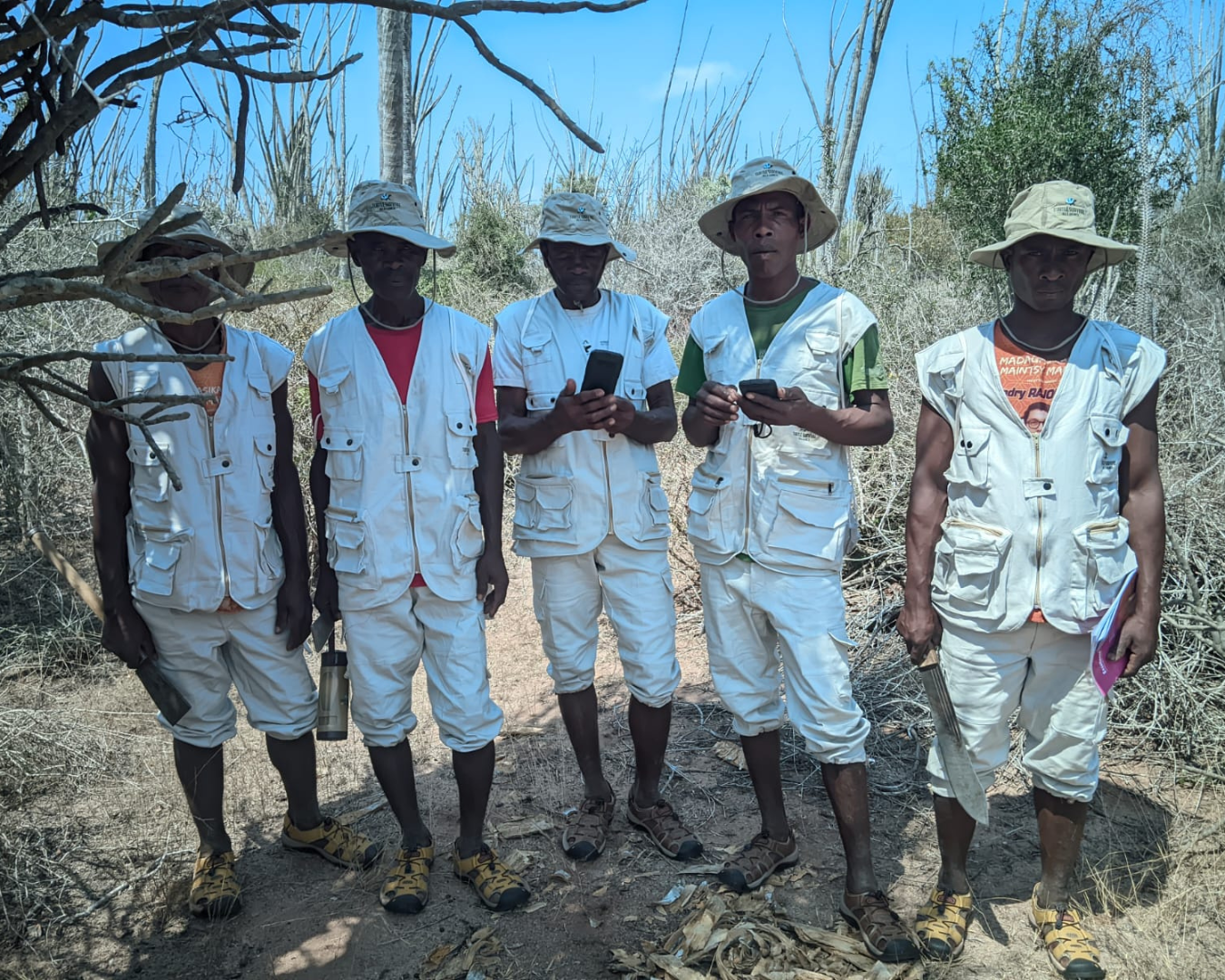
What makes this story remarkable is not the technology itself, but the willingness of these Antandroy rangers to embrace an entirely new way of learning despite their limited literacy. Every patrol still means walking long distances across loose sand under intense heat with limited access to water, guided by knowledge inherited from their elders. They continue to ask questions, help one another, and sometimes hesitate before pressing the right icon. Yet they are determined to learn because, for the first time, every kilometer they walk, every sokake they protect, and every threat they encounter can be recorded.
Technology has not transformed these men into rangers. It simply ensured that a commitment, carried quietly across the sands of Androy for generations, can finally be seen and witnessed by the world in real time.
–
About Turtle Survival Alliance
Formed in 2001 and gaining nonprofit status in 2004, Turtle Survival Alliance is a global conservation organization with a mission to protect and restore wild populations of tortoises and freshwater turtles through science-based conservation, global leadership, and local stewardship. Our science-based initiatives are directed by local leaders, inspiring sustainable, community-based stewardship to prevent extinctions. Where populations cannot yet thrive in the wild, our conservation breeding programs preserve opportunities for their future survival. Turtle Survival Alliance operates or supports projects in over 30 countries around the world, protecting critical habitats and providing on-the-ground resources to safeguard the most imperiled turtle and tortoise species. Through these efforts, we make a positive impact on well over 100 species of turtles and tortoises. For more information, visit us on our website and join the conversation and learning experience on Facebook, Instagram, TikTok, YouTube, X, BlueSky, and LinkedIn.