
By Tsanta Rakotonanahary, Head of Veterinary Support, TSA Madagascar
Reader discretion advised: This blog includes images of injured tortoises that some readers may find distressing.
Each confiscation marks a new beginning—an odyssey of hope rising from hardship.
From January to April of this year, TSA Madagascar has already received over 1,000 tortoises rescued from six confiscation cases. They were seized all around Madagascar, from the South to the North, in Ampanihy, Morondava, Antananarivo, Moramanga and Nosy Be. Each tortoise carries the weight of a traumatic ordeal, a silent story of suffering and survival.
Amid the challenges, hope remains in the country through those who raise their voices and act when tortoises are being abused or kept illegally. Caring individuals continue to stand up against cruelty, reporting cases where tortoises are confined unlawfully.
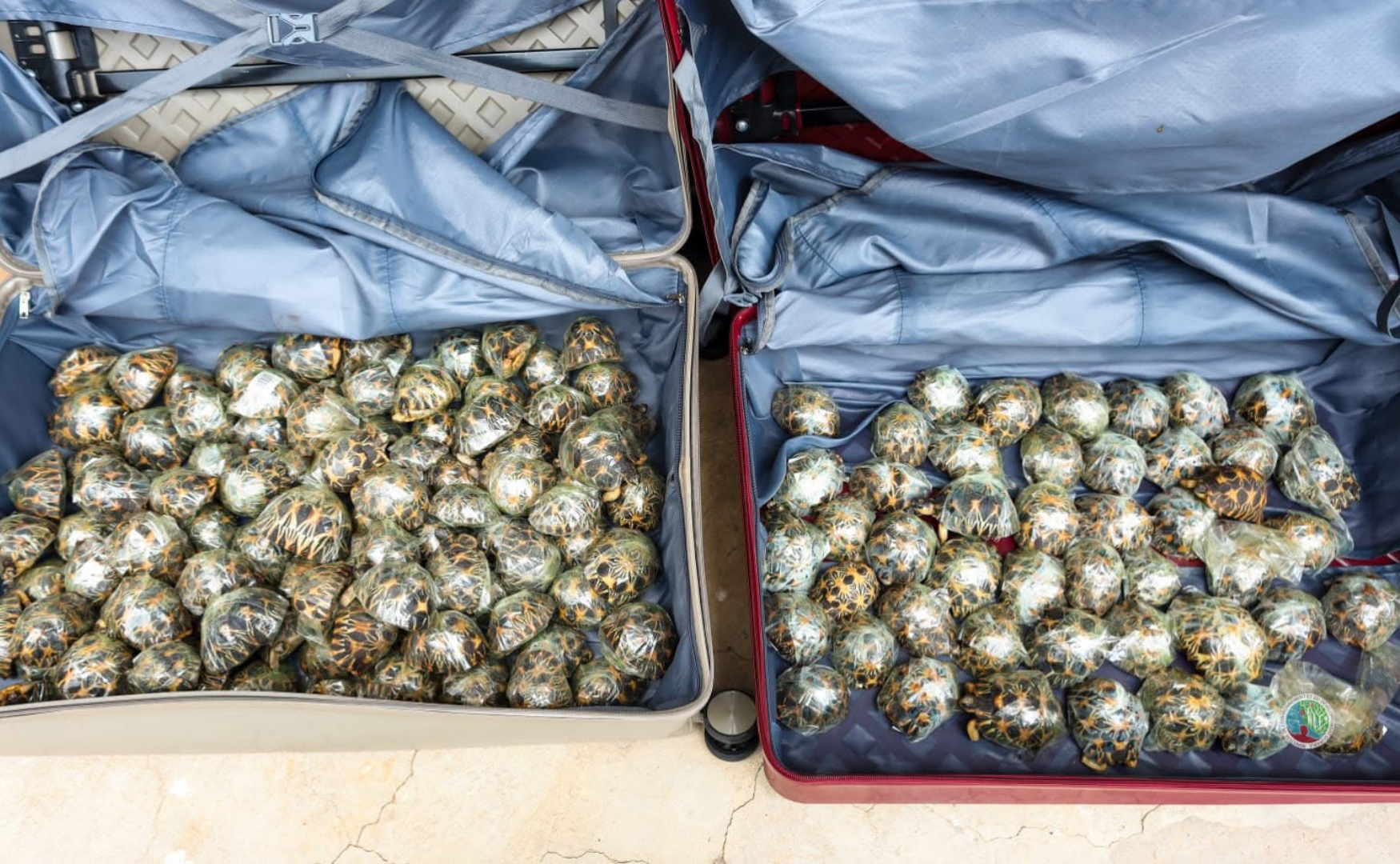
When we first receive the tortoises, they are wrapped tightly in tape, hundreds of them are crammed into suitcases, hidden inside bags, all destined for the illegal wildlife trade. Our eyes fill with tears, our hands tremble, our hearts feel heavy. Questions flood our minds: Why? How many will survive? What are their chances? What have they endured from the moment they were taken from the wild to the moment they were rescued? How long were they trapped in such suffering? Without losing a second, our team begins their care. Each tortoise is gently cleaned, often covered in dirt and filth. They are slowly rehydrated and carefully fed, helping them regain strength, one fragile step at a time. Once they begin to recover, we ensure that they carry no parasites or diseases that could endanger other tortoises in our care. Each one undergoes careful testing and monitoring. Because caring means more than rescue; it means giving every single animal a real chance to survive and thrive.
The tortoises arrive exhausted and dehydrated, their bodies weakened by malnutrition, their immune system is so fragile that even minor infections can become life-threatening. Some do not make it.
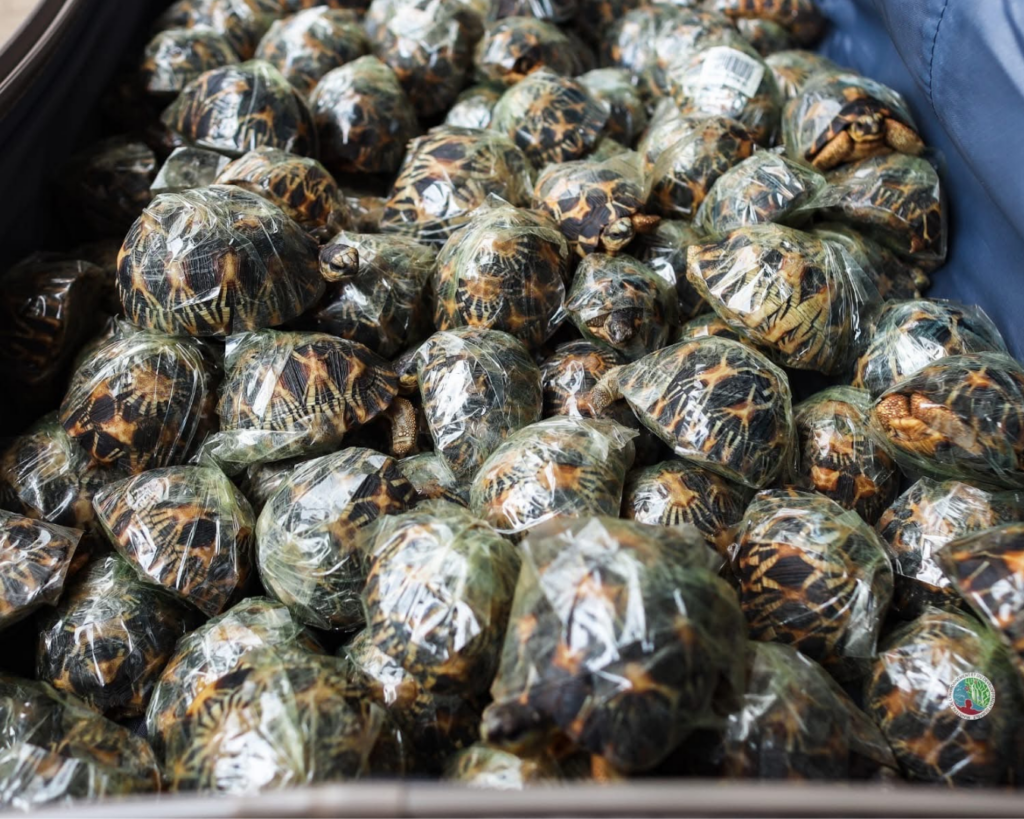
Radiated tortoises (Astrochelys radiata) were wrapped in tape and stuffed into suitcases to be smuggled out of the country and sold in the illegal pet trade. The Turtle Survival Alliance Madagascar program received and triaged these tortoises.
Among the most difficult moments are those when we find tortoises that have already succumbed to the stress and conditions of transport. In severe cases, the prolonged dehydration and pressure cause layers of skin to slough away, exposing raw, reddened tissue beneath. Others arrive with intestinal impactions, their digestive tracts filled with sand and debris likely ingested while desperately searching for moisture or food. Despite intensive care, some of these individuals are too weak to recover.
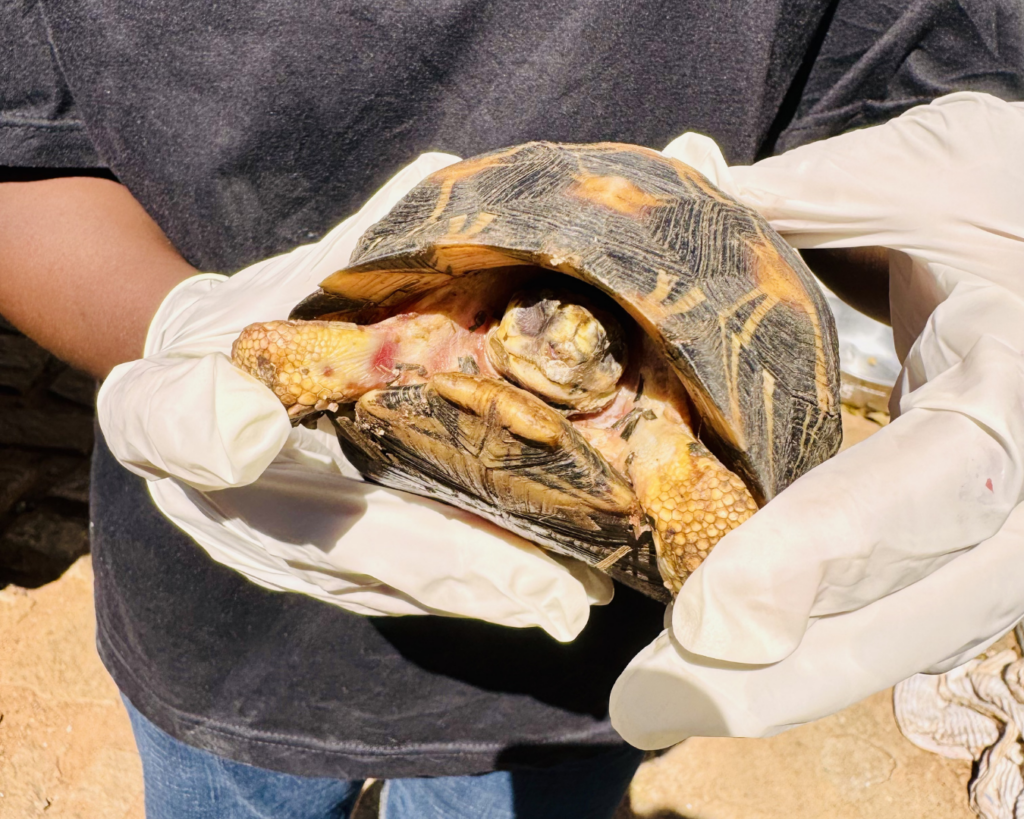
Many of the reduced tortoises suffered injuries and dehydration, which were swiftly treated by our veterinary team.
These losses weigh heavily on our team. Each one is a reminder of the cruelty of illegal wildlife trafficking and the urgency of our mission. Yet, even in the face of these challenges, we continue.
For those still fighting, we do everything possible. Supportive care, fluid therapy, wound management, nutritional support, and close monitoring become part of their daily routine. Recovery is often slow and uncertain, but within time, many begin to respond. A tortoise that lifts its head, takes its first bites of food, or slowly starts to move again becomes a powerful symbol of resilience.
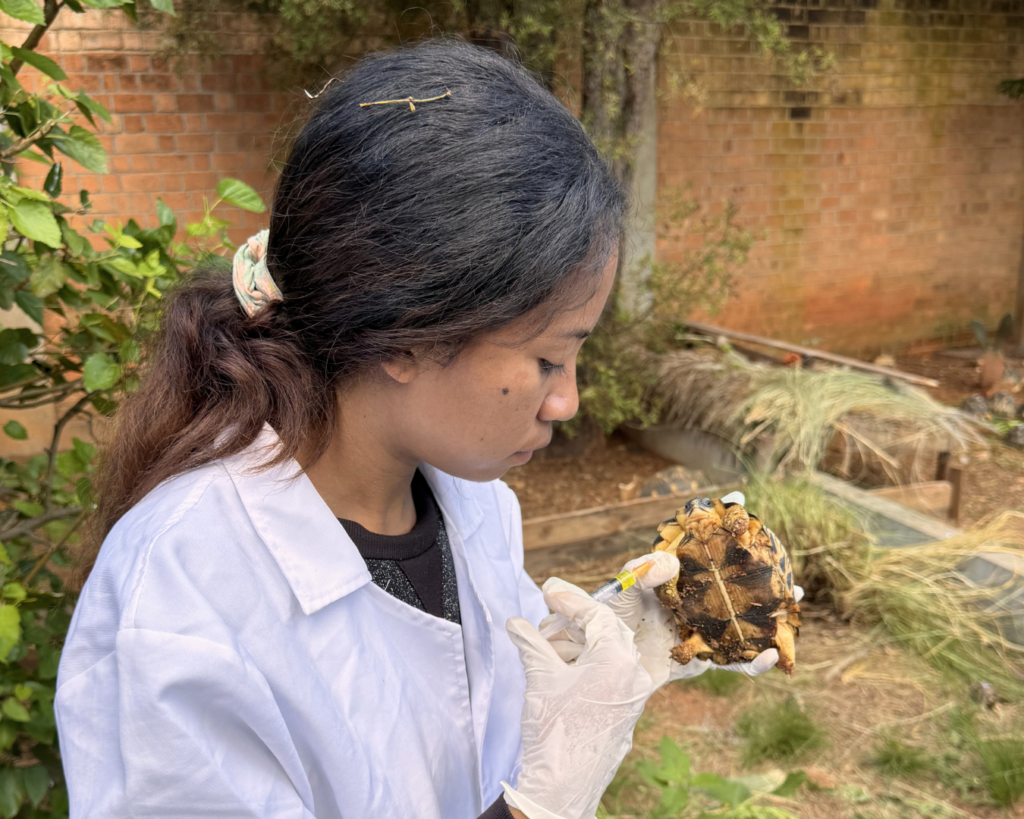
Veterinary care was administered to hundreds of tortoises from the confiscation.
Every survivor represents more than a successful rescue, it represents hope. Hope that these animals can one day return into their natural habitat. Hope that strengthened enforcement and public awareness will reduce future trafficking. Hope that, together with the support of our partners and donors, we can continue to respond to these emergencies and give confiscated tortoises a second chance.
Beyond medical care, the survivors take on another vital role. They become living ambassadors for education and compassion.
For children, meeting these tortoises creates a powerful emotional connection. Seeing animals that have endured hardship and survived fosters empathy and understanding. Many children are deeply moved by their stories. They begin to realize that these are not just animals, but valued lives that depend on human choices. Through this experience, they feel inspired to protect them, to speak up, and to share the message with others. Small voices grow into meaningful actions, and compassion becomes the first step toward conservation.
For adults, these survivors also serve as an important learning opportunity. They allow those involved in their care to gain hands-on experience in managing weakened tortoises, understanding their condition, providing supportive treatment, and monitoring their recovery step by step. Through this process, practical skills are developed, from rehydration and nutritional support to wound care and clinical observation.
These experiences strengthen local capacity to respond to future confiscations. Each tortoise that survives not only benefits from care, but also contributes to building knowledge and improving the way we support others in the future. In this way, the survivors help shape better preparedness and more effective responses for wildlife in need.
We do everything we can to help them survive not only for their own future, but for the impact they can have on others. Each survivor becomes more than a rescued animal; they become a symbol of resilience, a source of learning, and a catalyst for change.
In this way, the survivors become ambassadors, ambassadors of hope, education, and life-helping inspire a future where tortoises are protected, respected, and allowed to thrive in the wild where they belong.
Thank you for reading,
Tsanta
–
All photos courtesy of TSA Madagascar
Acknowledgments: AZA SAFE Radiated Tortoise Program, Happy Hollow Park & Zoo, Aktionsgemeinschaft Artenschutz e.V., Global Environment Facility
Making a donation helps support our global efforts in turtle conservation.