
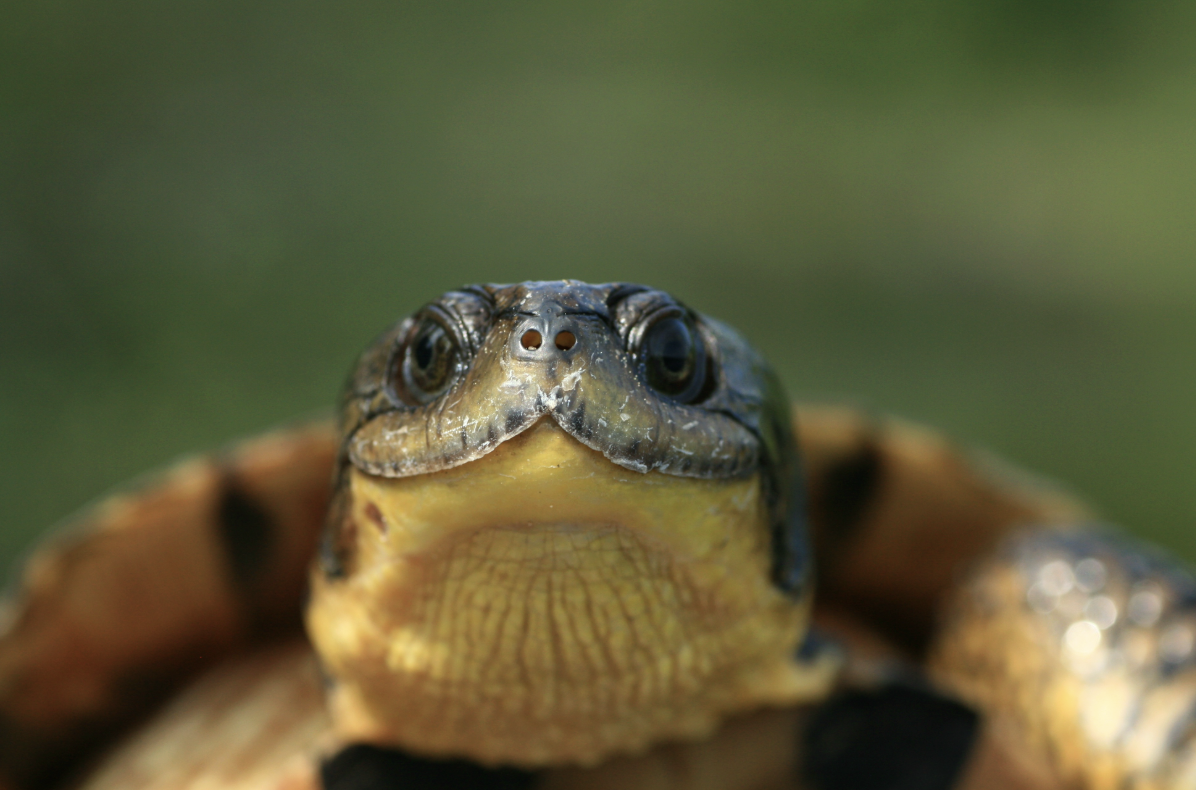
In this guest feature by Patrick Moldowan for the Canadian Herpetological Society, read about Turtle Survival Alliance’s conservation partnership with Turtle Survival Alliance Canada.
February 20, 2026
By Patrick Moldowan
Research Assistant, Turtle Survival Alliance
The Turtle Survival Alliance (TSA), a U.S. charitable organization, works internationally to advance its mission to protect and restore wild populations of tortoises and freshwater turtles through science-based conservation, global leadership, and local stewardship. With a shared global vision of a world where turtles thrive in the wild, Turtle Survival Alliance Canada (TSA Canada) has officially launched as a registered Canadian charity based in Toronto. TSA Canada is an independent organization that aims to secure a future for the world’s most threatened turtle species.
One of the first actions of TSA in Canada is to assess the knowledge gaps and conservation priorities for the freshwater turtles of Canada. Although Canada has comparatively few turtle species, those that are present are of high conservation concern. The highest diversity and largest populations of turtles (and flora and fauna, generally) occurs in the warmer and higher productivity southern regions of Canada. The human population follows a similar pattern: two out of three Canadians (66%) live in southern Canada, within 100 kilometres of the United States border, an area that represents only 4% of the land area of the country (Statistics Canada 2023). Likewise, Canada’s agriculture, industry, and roads are concentrated in the south, making for a challenging landscape in which to conduct conservation.

National conservation statuses of the turtles of Canada as assessed by the Committee on the Status of Endangered Wildlife in Canada (COSEWIC), November 2025. Not at Risk: Western Painted Turtle (Prairie/Western Boreal-Canadian Shield population); Special Concern: Midland Painted Turtle, Eastern Painted Turtle, Western Painted Turtle (Intermountain-Rocky Mountain population), Snapping Turtle, Eastern Musk Turtle, and Northern Map Turtle; Threatened: Western Painted Turtle (Pacific Coast population) and Wood Turtle; Endangered: Eastern Spiny Softshell, Blanding’s Turtle (Great Lakes/St. Lawrence and Nova Scotia populations), and Spotted Turtle; and Extirpated: Pacific Pond Turtle and Eastern Box Turtle.
Photo: Turtle illustrations courtesy Shutterstock (Eastern Box Turtle), “pngwing” (Western Pond Turtle), and Adopt-A-Pond Program, Toronto Zoo (all others).
Alongside other priority regions—including Central America, southern Africa, Indochina, and Australia to start—the assessment of Canadian turtles is an important step to understanding what we know, what we don’t know, and, importantly, what we ought to know to effectively implement conservation actions. Working with leading turtle biologists in Canada, we are building on the framework of the Committee on the Status of Endangered Wildlife in Canada (COSEWIC) by recognizing the same designable units (DU), resulting in 13 taxa–populations under assessment. This conservation priority assessment has two key steps.
First, through review of the primary literature, each taxon/DU is evaluated for 19 criteria that are important for informing species biology and vulnerability to threats. These criteria include fundamentals such as population size estimates, size/age at sexual maturity, diet in the wild, home range size, clutch size, reproductive frequency, survival estimates, and longevity and generation time, among other biological traits. The resulting Research Score informs the state of knowledge and knowledge gaps for each species. This metric can be used to inform research priorities moving forward.
Second, a Conservation Priority Score is calculated as a measure of four components:
- existing level of conservation concern, as informed by COSEWIC and/or the International Union for the Conservation of Nature (IUCN) Red List of Threatened Species;
- geographic range size, acknowledging that range-restricted species are especially vulnerable to habitat destruction and other centralized threats;
- body size, which can underpin vulnerability to threats such as collection for consumption or the illegal pet trade; and
- Research Score, the existing state of knowledge about the species’ biology.

Photo: Patrick Moldowan
This project will produce summaries of research and knowledge gaps specific to species and Designatable Units, a quantitative conservation priority ranking, and comparisons of knowledge and research gaps with other regions of the globe.
The broad conservation assessments by COSEWIC and IUCN continue to be high standards to inform species conservation. Conservation assessments of turtles by the TSA and TSA Canada take the next natural step by pointedly identifying scientific knowledge gaps and species prioritization. This priority assessment of the turtles of Canada will join other regional assessments that span the globe to inform positive outcomes for turtles through the action of in-country conservationists and scientists, local partners, and the TSA and TSA Canada.

Photo: Patrick Moldowan
Header image: Blanding’s Turtle (Emydoidea blandingii)
Photo: Patrick Moldowan
References
Statistics Canada. 2023. Canada and the United States: The numbers on a unique relationship. Ottawa, Canada. Posted 21 March 2023, modified 08 July 2025, accessed 20 February 2026.
https://www.statcan.gc.ca/o1/en/plus/3250-canada-and-united-states-numbers-unique-relationship
Read the blog on the Canadian Herpetological Society website.