
By Makayla Peppin-Sherwood, Grants Manager, Turtle Survival Alliance
When I tell people I work for the Turtle Survival Alliance (TSA), they often say, “That’s so cool that you save turtles. I love turtles!” I enthusiastically agree, but always clarify, “Yes! But that’s not all we do.”
I truly believe our greatest impact comes from our work with communities, benefiting both the local people and the turtles we are sworn to protect. Nowhere is this collaborative success more apparent than in Madagascar.
For years, TSA’s strategy has been to link the protection of Radiated Tortoises and their habitat with opportunities for local communities. We work in the most rural region of Madagascar, where most households subsist on less than one U.S. dollar per day. Following the three back-to-back cyclones that devastated Southern Madagascar earlier this year, it is here that we have witnessed remarkable human resilience and have been met with the most enthusiastic and determined support for tortoises.
Our efforts in Madagascar rely entirely on the support of these communities. They serve as our first line of defense against poachers, act as champions for local forests, and are the key to recovering critically endangered tortoise species in Madagascar. Working with our team on the ground in Madagascar, I supported them in designing alternative livelihood programs and writing proposals to fund the start-up costs; our goal was to provide support that mirrors their dedication to us. The majority of these programs focus on utilizing invasive Opuntia (aka prickly pear), a win-win for conservation, as the products produced by the communities remove an invasive species while simultaneously improving their livelihoods. We held training events at our Community Outreach Center (COC) near our Tortoise Conservation Center (TCC) – where we care for 10,000+ tortoises–, and provided them with the space to continue to make and sell their products. Though only a few months old, these programs have already generated more than $1,500 in revenue, transforming the livelihoods of the people who, in turn, have transformed us.
Biochar
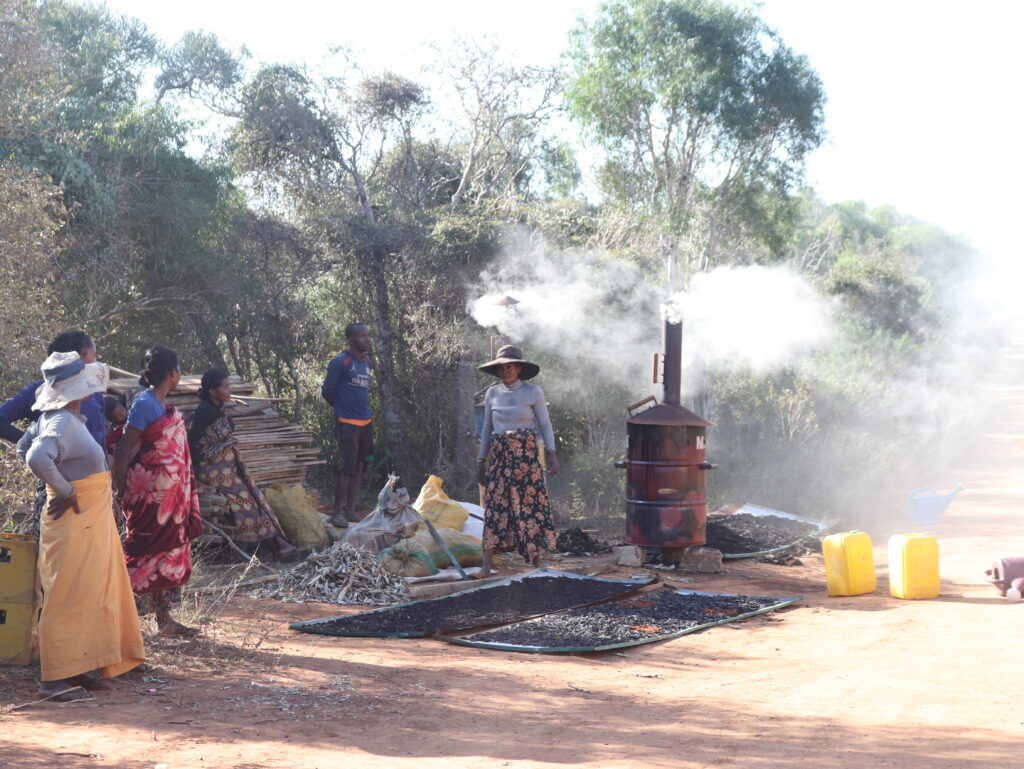
Biochar, a carbon-based soil amendment, is created by burning plant matter, in this case, the invasive Opuntia. Thanks to support from Aktionsgemeinschaft Artenschutz (AGA) and Char2Cool, we have successfully developed a water-free method for producing Biochar, specifically tailored for dry regions like Southern Madagascar.
This Biochar can be used alone, mixed with manure, or sold to other gardeners. At the COC, we established a 2,500 m² community garden with over 150 garden beds to test Biochar and provide a space for community members to grow vegetables. Preliminary results are very encouraging: we’ve seen sweet potato harvests double, and some seeds, such as cow peas, require Biochar to germinate.
Soap, Seeds, and Jam
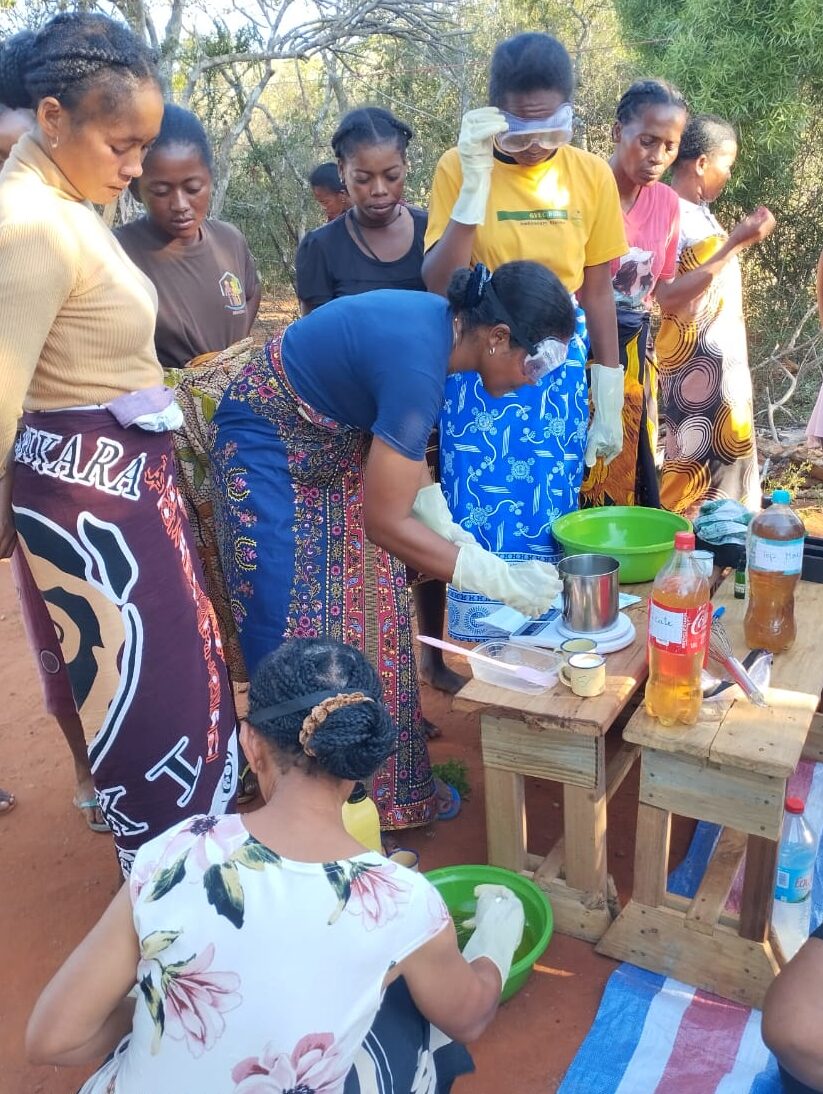
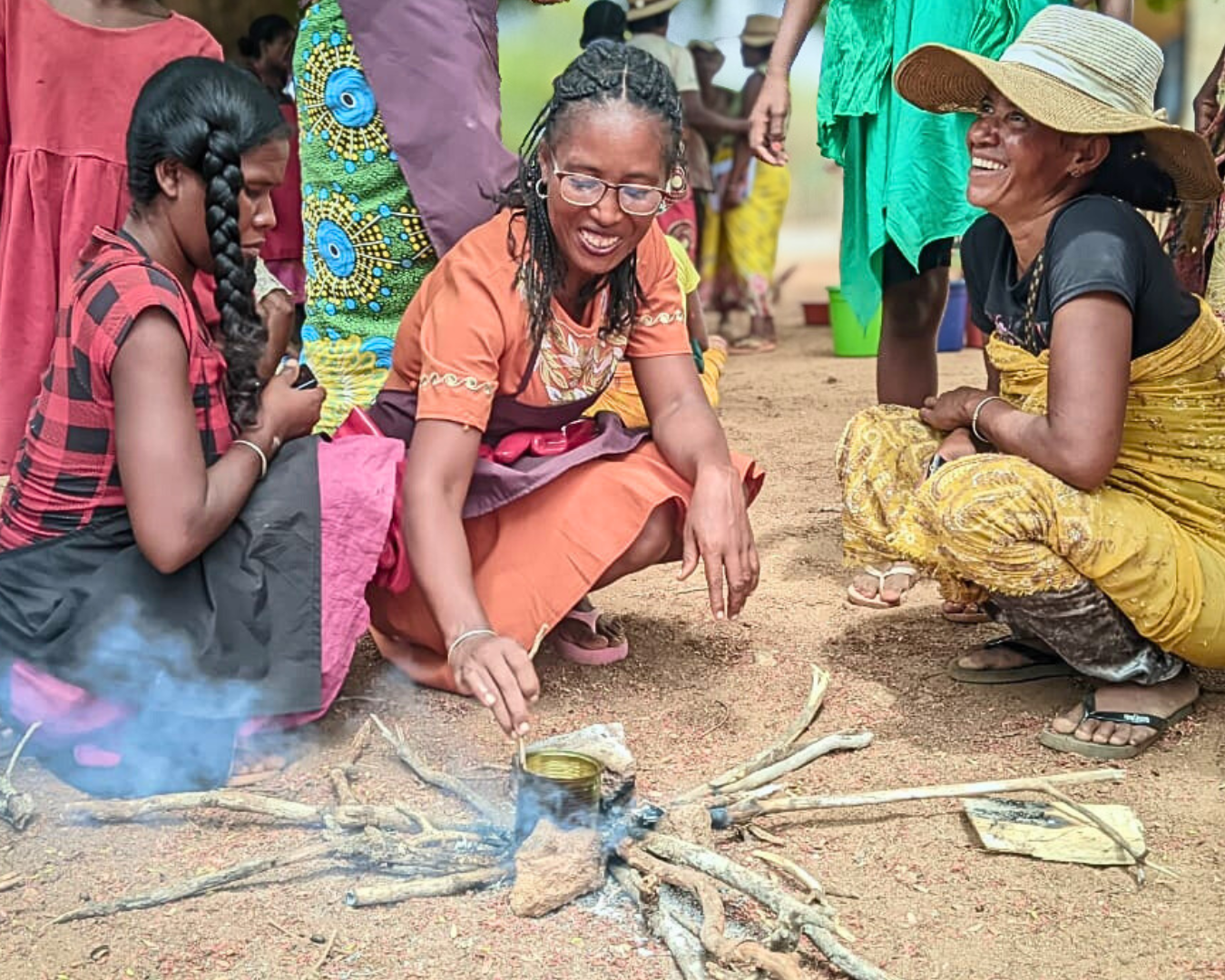
This fall, a soap and jam production workshop was held at the COC. Local women learned to craft soap using ingredients such as goat’s milk, local plants, and even Opuntia! Using the Opuntia fruit, they learned how to make a delicious jam. This truly is a waste-not-want-not program, as the seeds removed from the fruit in the jam-making process are then sold to local producers of cactus seed oil, which is known for its high concentration of linoleic acid, Vitamin E, phytosterols, and polyphenols.
This training has built practical skills and livelihood opportunities for cooperative members, particularly women, while promoting the value of local, natural resources and enhancing community enterprise development. The women have since formed a successful co-op, with reports of the soap selling out daily. Cooperative members now have the equipment and know-how to produce different types of soap and make Opuntia jam in large quantities. They meet regularly at the COC to keep the market stocked and are working to expand to larger, regional markets.
Black Soldier Fly Larvae
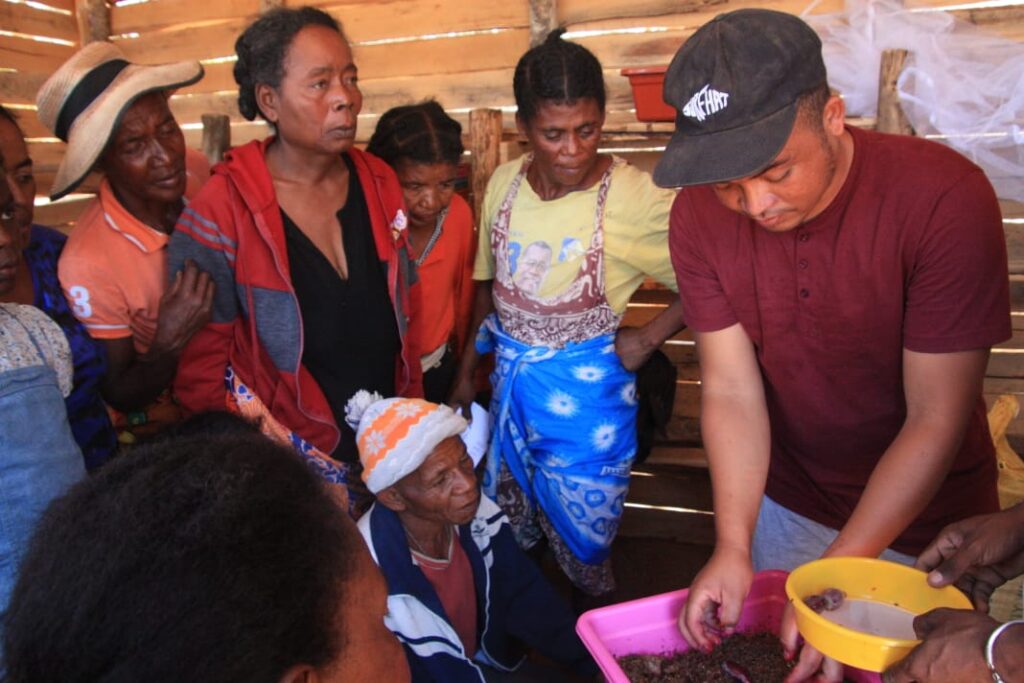
In partnership with the Madagascar Biodiversity Center, our newest initiative at the COC focuses on utilizing shredded Opuntia as feed for Black Soldier Fly Larvae (BSF). In October, we successfully launched a comprehensive training program for community members. The training began with an introduction to BSF biology and their life cycle, covering the egg, larva, pre-pupa, pupa, and adult stages. This was followed by extensive hands-on experience in managing BSF at every stage. The BSF larvae are processed into high-protein animal feed, and the resulting frass is converted into valuable organic fertilizer. We anticipate BSF to become a sustainable waste management resource that simultaneously boosts agricultural productivity and generates income. To support ongoing production and demonstration, we have established a dedicated BSF hangar at the COC, fully equipped with rearing trays, cages, containers, and all necessary materials.
Beekeeping
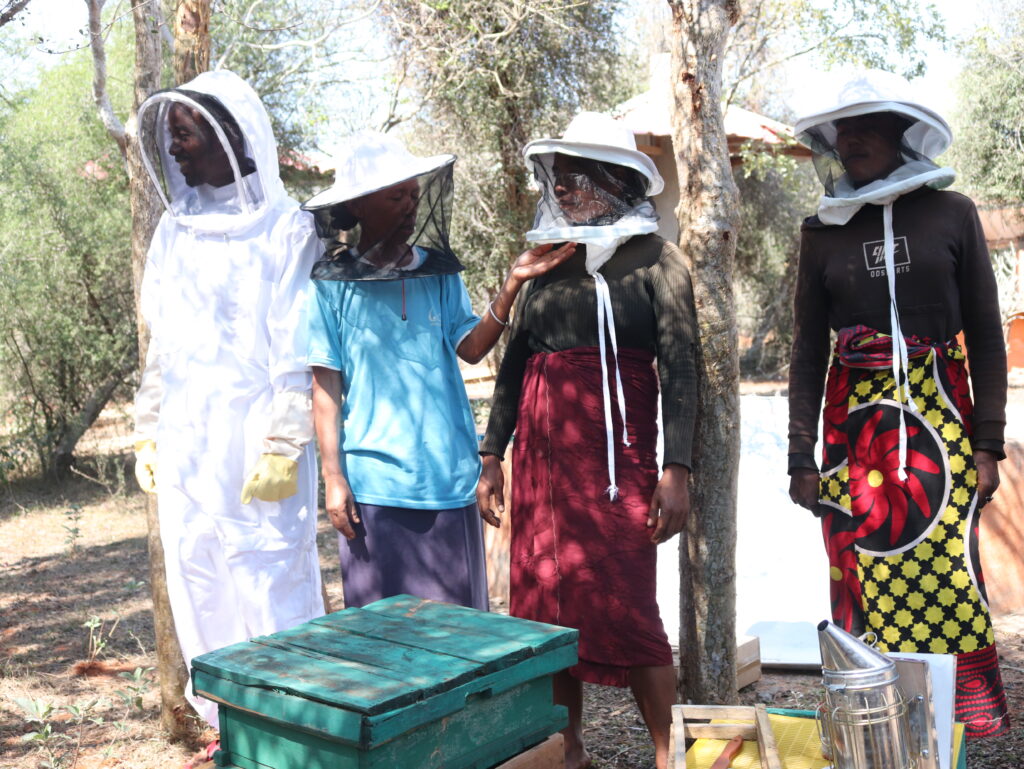
This summer, the COC hosted a workshop for over 50 community members focused on enhancing community knowledge and capacity for honey production. The “classroom” session provided a solid foundation in beekeeping fundamentals, exploring its economic and ecological advantages, modern tools and best practices, techniques for hive enrichment and productivity, and strategies for disease prevention and predator protection. The hands-on component gave participants practical experience, including bee trapping from a traditional hive and installing nineteen modern hives at the COC for the community to use. Community members are not only able to use and sell the honey, but are also learning about the benefits and uses of beeswax, while simultaneously boosting local honey bee populations.
Looking forward, I’m excited to see these initiatives and their impact continue to grow and I’m excited for the new programs we plan to launch in 2026. By partnering with local communities, we can make so much more of an impact on the future of turtles and tortoises than we could ever make by ourselves. I’m proud to be a part of TSA because of our community-centered approach to conservation. Witnessing the resilience and hard work of my Malagasy colleagues is such a gift, and I am grateful that I get to play at least a small part in supporting their efforts.
If you’d like to make an impact for these communities, please consider making a donation today. If you donate before December 31st, 2025, your gift will be matched!
Acknowledgments: Aktionsgemeinschaft Artenschutz (AGA), AZA SAFE Radiated Tortoise, Char2Cool, Columbus Zoo and Aquarium, GEF-PACIWT, Madagascar Biodiversity Center
Header image: Community members look on as demonstrators heat up ingredients for the soap-making training. All photos courtesy of TSA Madagascar