
Each year, an estimated one million turtles are trafficked globally.
At major U.S. airports, turtles are among the most heavily trafficked reptiles. Thousands are intercepted just in time, before they enter illegal wildlife trade channels supplying the pet market. But even when they are confiscated, a difficult question remains: Where do they belong?
Many turtle species exhibit strong site fidelity, or tendency of an animal to repeatedly return to or remain in the same specific area, and placing individuals away from their original home range can lead to disorientation and increased mortality risk as they attempt to find their way home. Returning trafficked turtles to their native range is critical for their survival—misplaced releases can disrupt ecosystems, spread disease, and dilute unique genetic lineages. It can also reduce the individual´s survivorship when it is released into an environment to which it is not adapted.
Today, when trafficked animals are confiscated by local authorities, zoos and aquariums have stepped in to shelter and care for these animals. Many of these animals are kept in horrible conditions while being trafficked. They are often starving, injured, diseased, or all of the above. Institutions like zoos and aquariums, when equipped with veterinary teams and appropriate space, can help triage and quarantine them. Without a clear path back to the wild, these animals are stuck in these temporary shelters waiting.
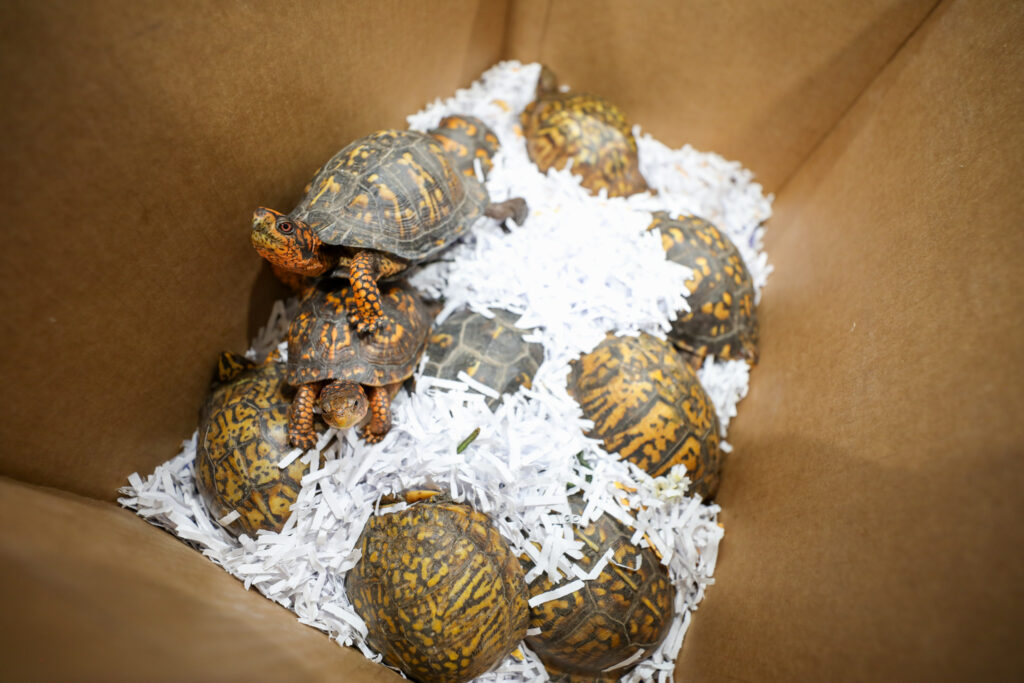
Aquarium, an AZA SAFE: American Turtle Program dedicated care facility. Photo courtesy of the New
England Aquarium
Before a single turtle can be released, it must go through a careful, multi-step process: emergency placement and triage, disease screening, and often years of long-term care. From there, scientists must determine its geographic origin through genetic testing, identify and evaluate a safe release site, and assess the suitability of both the turtle and the recipient population in terms of pathogen risk.
Even then, the work isn’t done. Permits, domestic and international regulations, and coordination between agencies can take months or longer. Turtles are often first reintroduced in controlled “soft-release” environments before full release, followed by ongoing monitoring to ensure they survive and adapt.
Zoos, aquariums, and conservation NGOs are routinely called upon by federal and state agencies to take in confiscated turtles and tortoises from illegal trade. However, many institutions are now at or beyond capacity, limiting their ability to accept additional animals.
For those already holding confiscated turtles, the frequent absence of reliable origin data creates a major bottleneck for repatriation, making it difficult to return individuals to appropriate wild populations. This not only restricts opportunities to bolster depleted populations in the wild, but also contributes to long-term, indefinite holding that further constrains already limited institutional space.
A new collaboration aims to change that by mapping the genetic identity of turtles at an unprecedented scale.
The Atlas of Turtle Genomes for Conservation (ATGC), led by the Turtle Survival Alliance (TSA) and UCLA’s Institute of the Environment and Sustainability (IoES), is a collaborative initiative supporting turtle conservation by coordinating sample collection, laboratory analysis, and the use of whole-genome data from turtles across the United States. ATGC leverages advances in genomics and artificial intelligence to create an open-source tool that features a database of high-quality genomic maps and an AI-driven analytical pipeline, enabling rapid, accurate determination of the origin of confiscated turtles, thereby enhancing repatriation efforts and guiding enforcement actions against illegal trade.
To build these maps, we first need to assemble a reference genome for each species. A reference genome is a high-quality, complete map of an organism’s DNA—essentially a detailed genetic blueprint of a species that serves as the master guide for assembling and interpreting DNA sequences from other individuals of the same species.
“Without a reference genome, we cannot put together the DNA fragments of all the individuals we sampled adequately. It’s like putting a puzzle together without the image on the box to guide us,” says Natalia Gallego-Garcia, Director of Conservation Genetics at Turtle Survival Alliance, and Co-Chair of the IUCN SSC Tortoise and Freshwater Turtle Specialist Group.
She, along with UCLA Distinguished Professor and Director of the La Kretz Center for California Conservation Science, Brad Shaffer, is leading the ATGC program. With a reference genome, entirely new possibilities emerge in the field of conservation genomics.
Despite their importance, reference genomes remain unavailable for most turtle species or are outdated and low-quality by current standards, given the fast advances in sequencing technology over the years.
In the United States alone, only 11 of the 59 native continental (non-marine) turtle and tortoise species currently have a high-quality reference genome. That leaves a significant gap.
About 10 years ago, the cost of producing a single reference genome—often nearing $1 million—placed this work out of reach for most conservation efforts. Today, a high-quality reference genome can be completed for approximately $8,500 per species.
Because these genomic resources will be open access, scientists and conservationists worldwide can use this shared knowledge to inform any type of genomics research. We will use these resources to advance the ATGC project. Ultimately, this will enable the precise repatriation of confiscated turtles back to their native environments.
Recognizing the urgent need for high-quality reference genomes, TSA has launched the Adopt a Turtle initiative—a campaign dedicated to supporting the development of a reference genome for every turtle species in the USA. Each genome requires an estimated $8,500 in funding, and TSA is actively partnering with early supporters to accelerate this vital effort.
Early momentum is already building, with 4 of the 48 target species identified for support having been adopted as the initiative takes shape.
Once reference genomes are developed, the next phase in the ATGC program will involve generating maps of genetic variation across species’ entire native ranges.
While the initial focus of ATGC is on U.S. species, the long-term vision is global.
To learn more about the Reference Genomes for Conservation project, visit turtlesurvival.org/genetics/ref-genomes
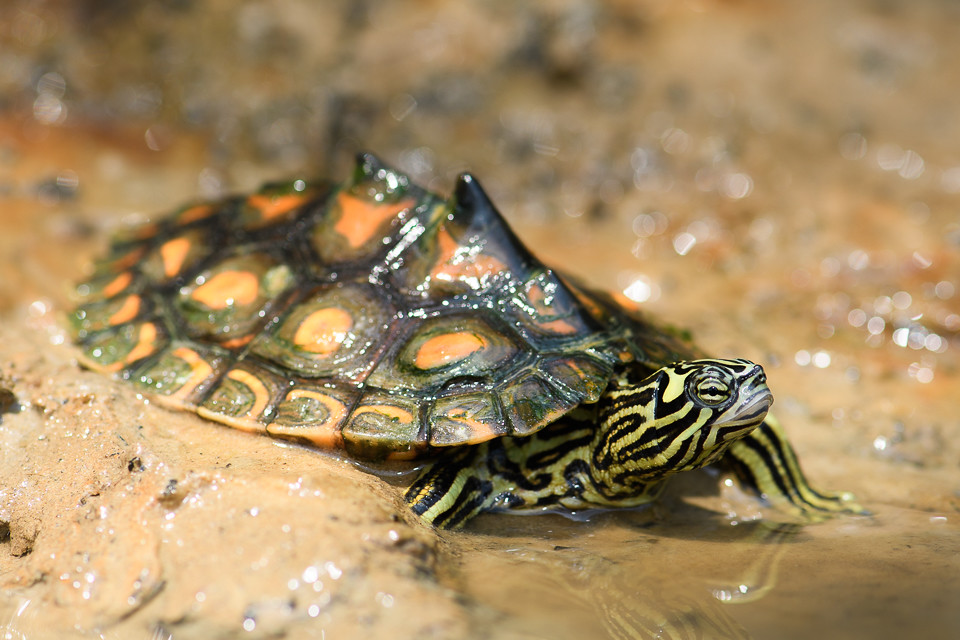
Header image: Yellow-blotched Map Turtle (Graptemys flavimaculata). Photo by Jason Folt