Conservation Genetics Project
Genomics of Central American Turtles
From taxonomy to population health—Bridging critical knowledge gaps with genomic data
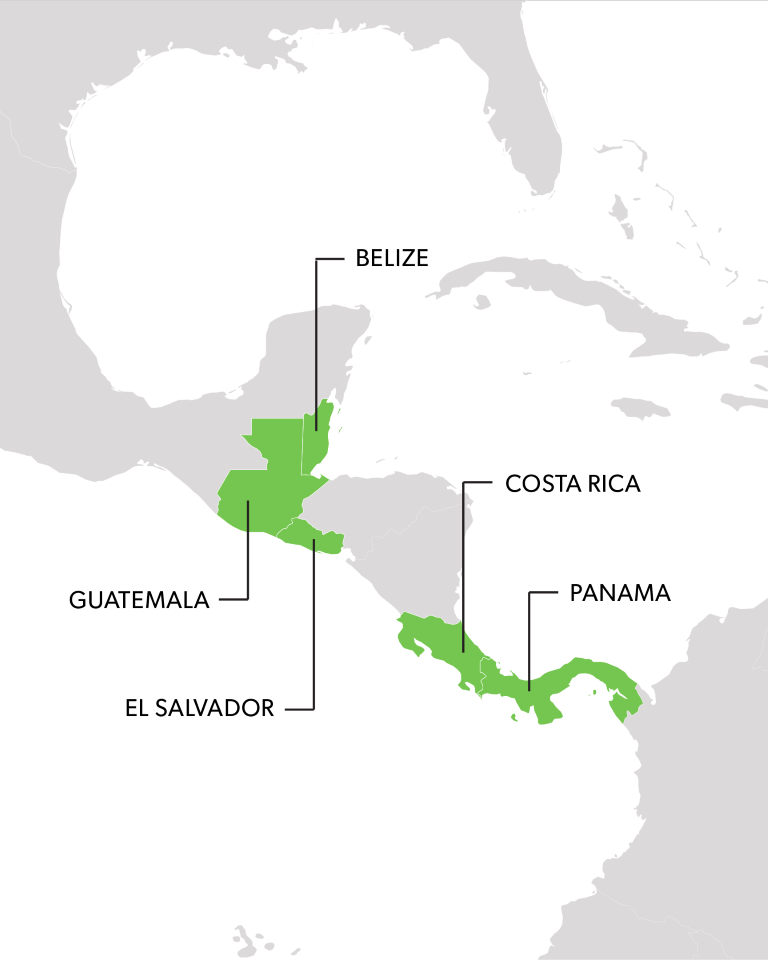
Central America is one of the world’s great crossroads of biodiversity—a transition zone between the Nearctic and Neotropical realms, home to an exceptional concentration of turtle diversity found nowhere else on Earth. The region includes unique evolutionary lineages such as the monotypic family Dermatemydidae and the endemic Staurotypinae, yet its turtle fauna faces mounting threats. Rapid land-use change has fractured habitats, and scientific research has historically been concentrated in only a handful of accessible sites. As a result, large areas and several species remain poorly studied, leaving major gaps in the information needed to guide conservation.
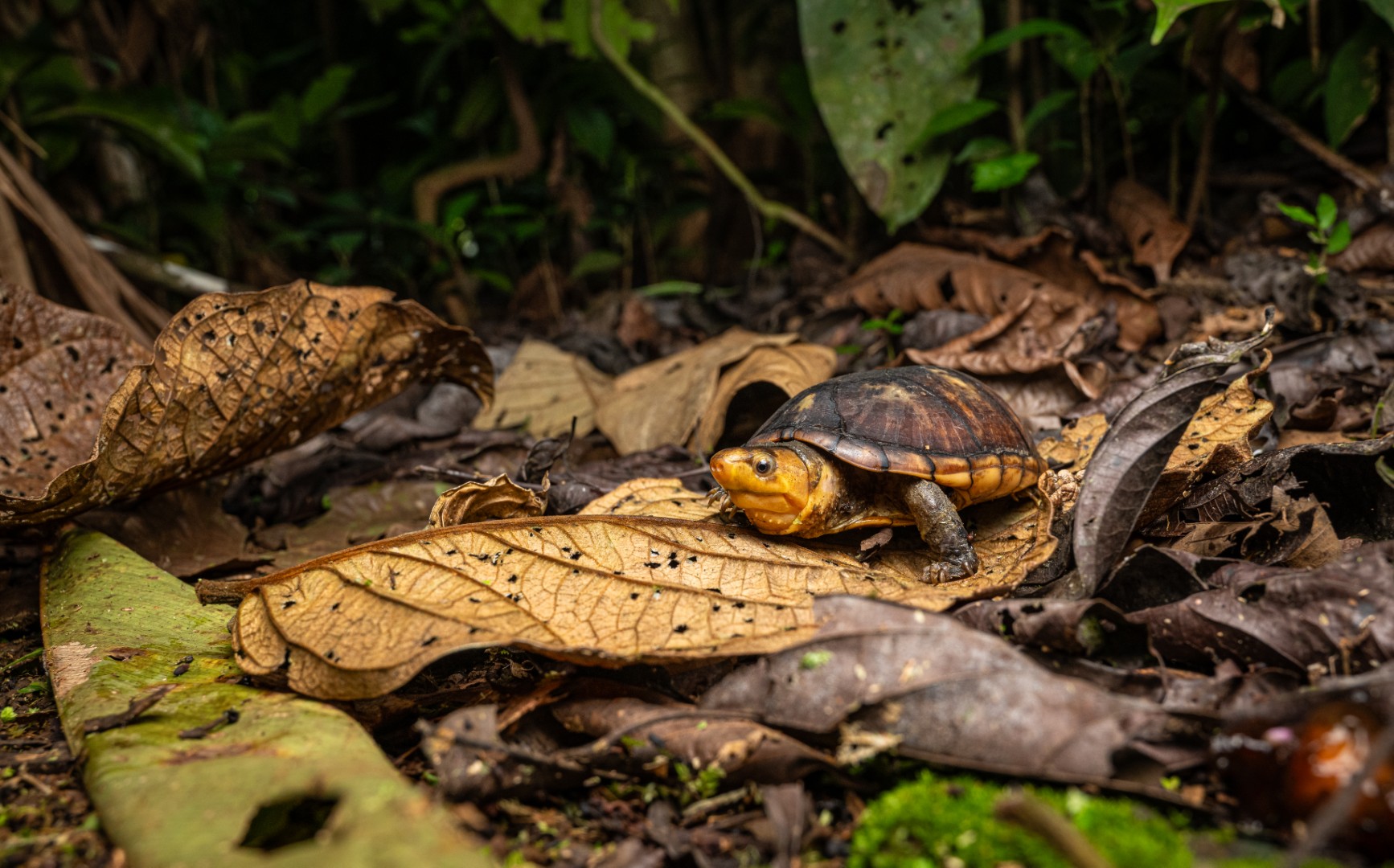
Our project uses modern genomic tools to fill these gaps and strengthen conservation planning for Central American turtles. For data-deficient species such as the Narrow-bridged Musk Turtle (Kinosternon angustipons), the Brown Wood Turtle (Rhinoclemmys annulata), the Central American Snapping Turtle (Chelydra rossignoni), and the South American Snapping Turtle (Chelydra acutirostris), we are generating the first comprehensive demographic and population-genomic datasets. These analyses reveal patterns of genetic diversity, population size change, connectivity, and potential inbreeding—key information for identifying vulnerable populations and designing effective conservation actions.
We are working to clarify complex taxonomic groups, particularly within the genera Trachemys and Rhinoclemmys. These turtles include numerous species and subspecies whose evolutionary relationships are poorly resolved and often contradictory across previous studies. High-resolution genomic analyses allow us to test competing hypotheses, identify distinct evolutionary lineages, and determine which units merit separate conservation management.
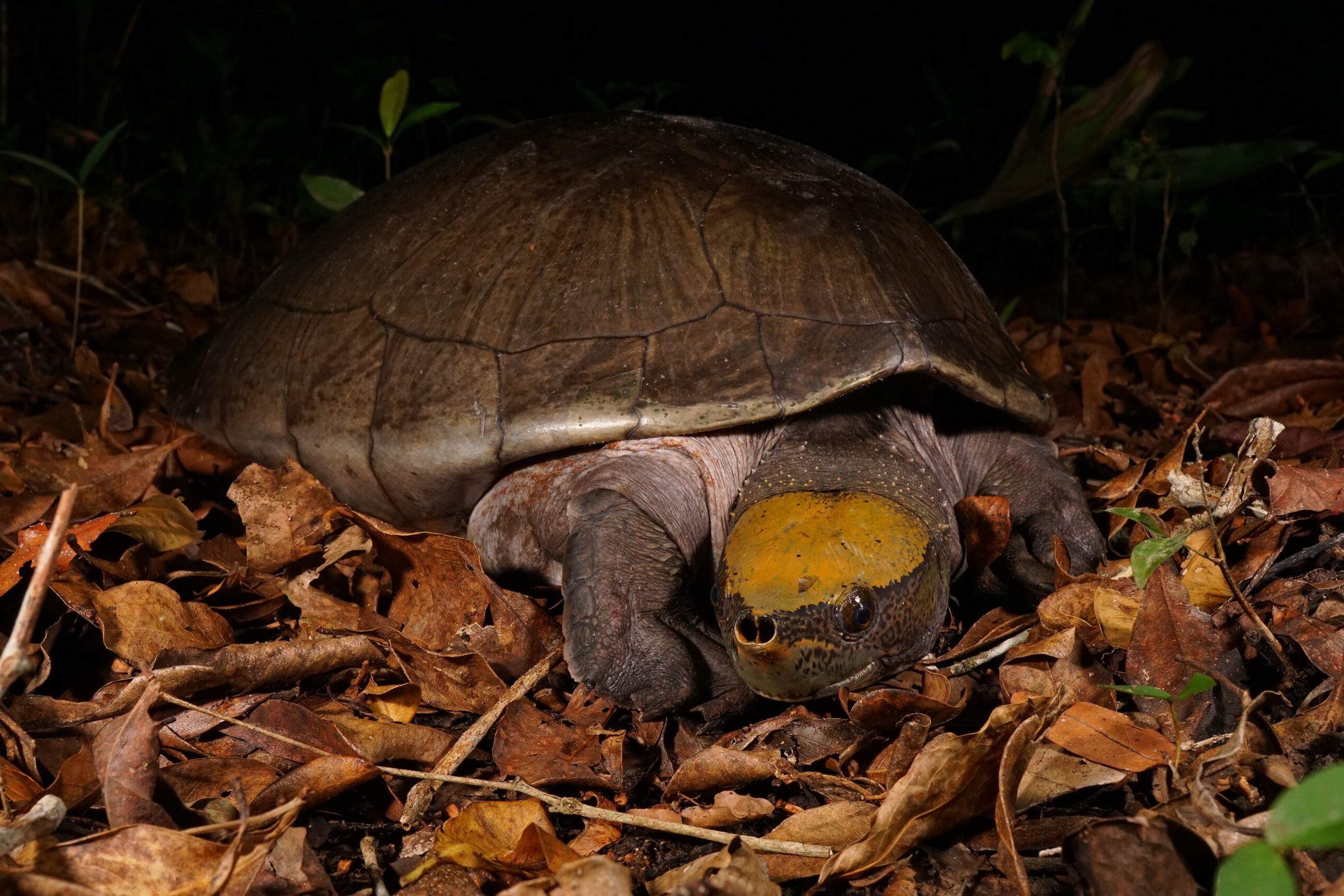
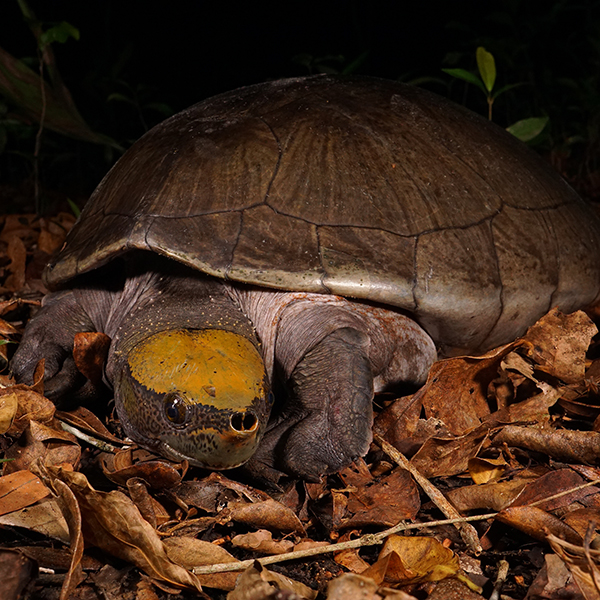
Finally, we are conducting a phylogenomic revision of the critically endangered Central American River Turtle (Dermatemys mawii) (pictured). Through extensive sampling across its range, we aim to clarify its evolutionary history, assess potential population structure, and determine whether unrecognized lineages exist—information essential for guiding recovery efforts for this culturally important and highly threatened species.
By combining regional context, field sampling, and cutting-edge genomics, this project provides the scientific foundation needed to protect one of the world’s most imperiled yet understudied turtle communities.